Thursday, March 14, 2013

Ghost Dog of Tingewick

This photo has recently popped up in popular media once again, as part of an article by the Huffington Post on ghosts, featuring a haunted mirror that recently sold on eBay.  I had seen this photo before, but seeing it mentioned once again sparked an interest that sent me on another disappointing research journey, lol.


The photo is found throughout the web, being shared on blogs and forums alike, but unfortunately, the information is VERY scarce...and seems to be a near-copy and paste job.  A few sites mentioned a few additional details, but the basic story goes as follows:

In August of 1916, Arthur Springer, a retired member of the Criminal Investigation Department (CID) now commonly referred to as Scotland Yard, took this photograph of two ladies having tea while a maid looks on.  The photo was taken at the home of Kate Townsend, who appears to the left of the photo, in Tingewick, Buckinghamshire, England.  At the time of the photo, the dog, which some say appears to be a golden retriever, or possibly some type of long-haired hound, was allegedly not seen, and some sites go on further to claim that Mrs. Townsend did not own such a dog.

The Ghost Dog of Tingewick has appeared in several books, two of which I own personally.  I looked them up in both Brad Steiger's 2003 edition of Real Ghosts, Restless Spirits, and Haunted Places, as well as the 2007 Famous Ghosts and Haunted Places, but neither produced any additional information.

That's when I set out to see what I could find out about the people involved...

What I found was that there was an Arthur Springer who worked for the CID, but there wasn't any additional data about him or his character.  I couldn't find any Kate Townsends, but throughout the past 200+ years, there has been a large population of the Townsend surname in and around that area of Buckinghamshire.  I did find a Kate Townsend Bunkley, whose birth date does seem to correspond to what appears to be the age of the woman in the photograph, but I was really disappointed that I wasn't able to find more information.

However, I can just look at the picture and confidently say that I don't believe that this is a ghost dog.  The way the photograph is framed, it appears as if the dog is supposed to be in the photo, as it is taken into consideration in regards to the symmetry of the subjects in the middle of the frame.

Secondly, what appears to be a headless, transparent, and possibly skeletal, dog form can be explained VERY simply.  It looks as if the dog simply was moving while the shot was taken.  Its head appears to be turned toward Mrs. Townsend, giving it the appearance that its "not there" and the very transparent look of its hindquarters is probably because the dog is wagging its tail!  An example of this type of photography can be seen to the right in the photograph taken by HPIR founder, Melissa Stanley, as a promotion photo for the Haunted and Historic Guyandotte Tours!  

In conclusion, I have to say that this image of the ghost dog is NOT paranormal.  The maid on the other hand...that's open to debate!

*Want MORE ghost photos?  See Theresa's Paranormal Photos Page!*

Wednesday, March 6, 2013

Book Review-Haunted Route 66

Title: Haunted Route 66-Ghosts of America's Legendary Highway
Author: Richard Southall
Published: By LLewellyn 2013
Amazon Info: Haunted Route 666

At first glance, it doesn't look like today's book review subject has anything to do with West Virginia or the tri-state.  However, its author, Richard Southall, is actually from West Virginia!  Those involved in ghost hunting, whether in the tri-state or not, will probably recognize Southall's name from one of his other books, How to Be a Ghost Hunter, which has become a textbook for so many starting their own investigation groups!

Anyway, as the title suggests, the subject matter of this book is not really related to the tri-state, but concentrates on the history and haunts of America's Highway, Route 66.  Stretching from Chicago, Illinois to Santa Monica California, this historic route covers 8 states and 2500 miles...plenty of room for ghosts!

There's a great little introduction into the history of Route 66 itself, which officially opened in1926, and each following chapter deals with a particular state along the route and its ghostly inhabitants.  At 228 pages, its packed full of wonderful stories, some popular staples in America's ghost lore, and some lesser known tales.

This was a fun read and I learned a lot about some more obscure hauntings that are fairly creepy!  There is also plenty of history added to enhance and set up the ghost information.  However, this book wasn't exactly what I expected...I was expected the locations to ALL relate directly to the highway itself.  That's not the case; since the road was constructed to incorporate many previously existing main streets through little towns, a lot of places in the book have a history far beyond that of the road's official opening.

Also, not all the locations are located right along the route, lol.  There are some states where Route 66 only travels a handful of miles through, and with much of the original route inaccessible today, some chapters include locations for the individual states up to 3 hours away from the original Route 66.  And while its not what I expected, it works.  I think its a clever way to concentrate on a certain region of hauntings without being limited to just a state by state type of list.  There's a cohesiveness that is combined with a certain diversity, which makes this a very interesting compendium of haunted locations.

*Want MORE Book Reviews?*

Tuesday, March 5, 2013

Trigger Objects

Ghost hunting in the 21st century is turning out to be a weird mix of old and new.  While there are some groups out there developing and using high-tech gadgets that promise communication with the other side, others are desperately clinging to old school ideas and ideology.  There are multiple investigation techniques out there that can be used alone or together in order to custom-fit our cases and our own beliefs.  One such theory, that adequately combines both old and new, is the use of trigger objects!

Photo by  Complete Paranormal Services


Trigger objects are simply items that ghost hunters and paranormal investigators use in order to elicit communication from an entity.  The idea is to get the entity to MOVE the trigger object or otherwise interact with it in a measurable way.

Trigger objects are closely associated with the Singapore Theory of investigation, which involves recreating a scene or a time period for the entity through costumes, period music, and of course...trigger objects. You're only limited by your imagination and resourcefulness when it comes to choosing trigger objects, but here's a generalized list of my favorite types of trigger objects:

Objects Already On-Site
Objects at the location that already said to move with some frequency are the ideal trigger objects.  They are convenient and there is already a history and familiarity there. These can be items that belonged to, or held some significance to the suspected entity in life, or may simply be random items that forever reason, have been chosen by the entity to use, possibly as a means of communication.  Don't limit yourself to items that have a history of moving, though.  If there are any personal items of the suspected entity on-site, you might be able to convince them to move it for you.  Items under this category could include jewelry, religious items, rocking chairs, trinkets, war memorabilia, photographs, etc. Make sure questions pertaining to these stories and objects are covered in your client interviews, and also make sure you have PERMISSION to implement them in your investigation!  This is especially important if the objects are antiques or valuables.

Toys
Toys, especially period toys of the time of the suspected entity, are great ways to interact with the spirits or ghosts of children.  Toys that easily make noise or are easily moved are  ideal, as are items such as small music toys, balls, dolls, cars, stuffed animals, jacks, blocks, electronics, etc.  However, there are a few caveats.  Any toy with a battery or computer chip can totally act crazy all on its own, lol.  Dying internal batteries, temperature changes, and all manners of malfunctions will make these types of toys go off by themselves.  Toys that roll also will "activate" on their own.  If the floor is uneven, it can roll in a downhill direction so make sure to always have a level on hand.  But, perfectly flat surfaces will also cause these toys to roll with the slightest breeze or vibration.  With balls, you might want to use something with a thicker surface, or one that is slightly deflated...and look for intelligent movement such as sudden stops and starts and changing of direction.  Note:  Places like flea markets and antique stores usually have affordable antique toys that can be used as trigger objects, and Cracker Barrel has a huge selection of newly constructed period toys for a fair price.


Coins
Coins are small, portable, and fairly light.  They are easily recognized and pretty period specific.  They are also metal, which theoretically means that they could store and conduct energy with ease.  Included in the coin category, scrip is great to use at coal mine related investigations.  On a related note, coins are often reported in apportation cases, especially pennies and dimes.  If entities (or even RSPK) are already showing that they can move these items, then that could make them good items to incorporate on an investigation as well.


Alcohol and Tobacco
There are TONS of stories throughout ghost-lore concerning people leaving a drink, or a pipe, cigar, or cigarette out for a suspected entity who was said to have enjoyed the vice in life.  Choose the brand/type believed to be favored by your ghost and refrain from actually joining your entity  in this activity while actively conducting your professional investigation.  Also, clear such items with your client and make sure they understand that these are just trigger objects.

Electronic Communication Devices
I have reservations about including what I consider electronic communication devices, such as the Flashlight Technique and K-II meter...and any other device that relies on the entity to touch or interact with it.  These are fun devices to experiment with, and I commend their designers and those who use them for thinking outside the box, but just be aware that these devices are largely operating on hypothetical principles about what "ghosts" are and how they can operate in our physical realm.  Most of these devices are also very vulnerable to false positives.  When using such devices, know and understand how they work.  Back up any results with historic research and more objective data.

 Whatever types of objects you choose to use, there are a few things to keep in mind when it comes to actually monitoring if the object moves or not.  Make sure that the object is stationed on a sturdy, flat surface away from anything that might bump into it.  Depending on where its at, draw an outline around the object with chalk, or place the item on a sheet of white paper with the outline drawn on the paper.

A very old school method of detecting fraud and determining movement is to sprinkle the area around the object with flour.  This is pretty messy, so only do this step with permission, and with a way to thoroughly clean up. A well placed motion sensor may be a cleaner alternative to detecting fraud or accidental human contamination. There are also devices that are designed to pick up vibrations, but any suspected movements should be manually checked for seismic activity, drafts, interference by trains, traffic, and so forth.  And of course, make sure the object and the area around it is being video recorded with accompanying audio from multiple angles if possible.  Since it seems that the majority of objects move when no one is around to watch them, its important to have some visual record of what happened if you choose to implement this passive technique.

*Let me know what types of trigger objects YOU have implemented, and whether or not you've had success using them!  Feel free to comment below, or LIKE me on Face Book for discussion, links, and more!*


Monday, March 4, 2013

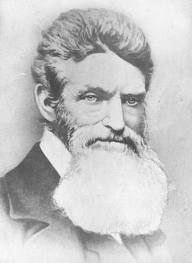
John Brown's Ghost

John Brown
The War Between the States was not something that started overnight.  Tensions were running high years before the first battle ever broke out, and in Harpers Ferry, VA (now WV) it was no different.  It was this small town on the border of Maryland that made its mark on the Civil War even as early as 1859.  It was that year when John Brown would make his ill-fated raid on the Harpers Ferry Arsenal.

John Brown was an abolitionist, who in October of 1859 led a raid designed to secure arms from the Harpers Ferry arsenal in order to supply a slave revolt.  On the night of October 16th, Brown, along with 20 men, both black and white, free and enslaved, left their planning headquarters in Maryland and marched towards Harpers Ferry.  There, Brown hoped that additional slaves and freed blacks would join, but that wouldn't be so.  By the evening of the 17th, a troop of U.S. Marines, led by Robert E. Lee would oust Brown from his "fort" in the arsenal's engine house, killing several of his men, and capturing Brown.

The first man killed in the raid was Dangerfield Newby, whose body was fed to local hogs, haunts the appropriately named Hog Alley...but John Brown himself has also been seen...

After John Brown was captured, he was accused of treason and murder and taken to Charles Town.  He was hanged there on December 2, 1859, but his ghost has been seen around Harpers Ferry.

Witnesses to the apparition have seen what appears to be a flesh and blood human being, in period dress, walking around the town, sometimes accompanied by a little dog.  This person is so life-like that many just assume that he is a re-enactor.  So authentic looking is he, that many tourists to the popular historic park will ask the gentleman to pose for a photograph.  He complies, but when the photo is developed, the man is not there....just a blank spot where he should have been.

This happened so many times that about 20 years ago, the local newspaper ran this story, and if I remember correctly, had an accompanying photo that showed a happy tourist posing with SOMEONE...someone who wasn't actually there.  The apparition of a gentleman who bears a strikingly strong appearance of John Brown is still being seen around Harpers Ferry, so keep your camera handy if you're in the area!  John is more than willing to pose for you, but whether or not he'll show up for you is debatable!

As an interesting side note, there was a photograph taken at the Haunted Cottage that shows what looks like John Brown's image peering in through an image.  Obviously, this doesn't fit his MO that he's held onto for so many years.  Is John Brown changing things up?  Is this the apparition of ANOTHER ghost of the super-haunted town-turned-park?  Or, are we simply dealing with the ol' pareidolia explanation.  Take a look and decide!


This link has a great summary of the events:
John Brown and the Harpers Ferry Raid

Engine House Today


Sunday, March 3, 2013

Safety--Getting Permission to Investigate

Photo by Sean Leahy  Photography
Maximizing safety during paranormal investigations has been a hot topic in the field lately, so I've decided that a series of safety-related articles might be a nice addition to the blog.  Much of what I'll be discussing over the next few weeks may seem like common sense, but sometimes we need to speak of the unspoken when it comes to certain protocol...just as a reminder and a reinforcement to what we should already be doing.

This first week's installment deals with the preliminary step of gaining proper permission to be at a location and how this  issue, which usually falls under the ethics of proper investigation practices, is actually first and foremost, a safety issue. Again, this sounds like such a common sense maneuver that every team claims to do diligently that it shouldn't even need to be discussed.  But, you'd be surprised at how many people out there still don't obey this basic tenet of paranormal investigation and its a mistake that COULD cost them their lives.  In fact, in some cases, it has.

In 2006, a 17 year old cheerleader was shot in the head in Ohio after she and several friends were caught trespassing on a man's property, which was rumored to be haunted.  In 2010, a young man was killed in North Carolina when a train struck him; he and several others were on an active stretch of track in search of a phantom engine.  These are extreme cases, but they are real cases...cases which could have easily been avoided if these people were not trespassing.


ACTIVE TRESPASSING
By my personal definition, active trespassing is when someone knowingly enters a property or location where they are explicitly NOT supposed to be---and they know they are not supposed to be there but they don't care.  If someone tells you to not be on the property, DON'T be on the property!  If there are any No Trespassing signs anywhere, DON'T enter the property!

In the paranormal investigation world, there are luckily not too many legitimate groups that engage in active trespassing.  Unfortunately, though, there are plenty of young, legend-tripping thrill seekers who engage in this activity, and when they get caught, claim they are ghost hunters...giving us ALL a bad name.  Not only is this activity against our investigation code of ethics, it is illegal and can result in arrests and prosecution.  It is also inherently dangerous as many times, these No Trespassing signs are there for a REASON!  There's a very good chance that there are risks associated with the property, and the owners don't want anyone getting hurt and suing.

Dilapidated buildings may be structurally unsound and pose a risk of collapse, or having someone fall through the floor.  These buildings can also harbor asbestos, mold, rodent and bird droppings, etc...all of which can pose a serious threat to those entering without proper equipment.  Outdoor properties may contain old hunting traps, mine shaft openings, wells, and hidden barbed wire fencing, among the many other dangers.  There is also the danger of the human element:  there may be someone actively trying to protect the property, or there simply may be someone there who is up to no good.


PASSIVE TRESPASSING
Passive trespassing is more common in this field, but can still be just as dangerous. By my own personal definition again, I define passive trespassing as investigating a location even though you cannot find an owner for the property, or believing that you have a right to be there since its "public" property.  Obviously, this area is a little more gray.  All properties are owned by someone, whether its an individual, a corporation, or the government.  All necessary steps should be taken to try to contact and obtain permission, in writing, from the owner to be on the property.  A visit to your county assessor's office, or county clerk can provide an owner's information, but also don't be afraid to ask around.  If there are residences or businesses nearby, they probably have a good idea who owns the property, or whether or not its abandoned.  Local law enforcement may also have an idea of who owns the property.  If an owner can truly not be found, its usually best to err on the side of caution and wait for another investigation opportunity to present itself.

Should a property actually be "public" property, make sure you are up-to-date on your state code.  Places like cemeteries and public parks are always favorite spots for newer ghost hunters to explore and gain some experience, but in many states, these places, whether its posted or not, are technically closed to the public after dusk.  You can still seek permission from whatever governing body runs or owns the location, and in many times, will be granted permission.

UNINTENTIONAL TRESPASSING
This last category is pretty broad and honestly, pretty weird.  I wasn't sure what to call it, so I'm going with unintentional trespassing.  This is when someone gives you permission for an investigation, but that person really isn't authorized to do so.  Sometimes an employee of a business will ask you to investigate, or give you permission without clearing it with the owner...especially if the owner lives out of the area and is not involved in the day to day operations of the business.  Another common scenario would be tenants of a rental giving permission for an investigation without consent of or to the knowledge of the landlord.  Generally these scenarios won't result in any type of physical/bodily harm, especially if the representative that gave you the permission is on site.  You may be asked to leave, or not publish certain information about any evidence you may collect if the owner finds out what is going on, but I've never heard of a case where anyone was hurt in this type of scenario.

However, there is a third type of unintentional trespass that COULD be dangerous. This is when there are multiple people living at a residence, usually a husband and wife, and only ONE of the adults gives consent...against the wishes or knowledge of the other, lol.  This actually does happen, and its happened to us.  Luckily, we spotted the red flags and gracefully bowed out of the investigation request before coming to the site.  I could only imagine what would happen if someone came home and found a bunch of uninvited strangers in his/her home!  This is also something that may happen when there are multiple generations of adults in the home and the parent or child gives permission against the wishes of the other, a scenario you sometimes see when there is an elderly person in the home.  Obviously, you would want to try to make sure that EVERYONE in the home is on-board and AWARE of what is happening, and that if there is a suspected issue, check to see whose name is actually on the title or deed, and that the one granting permission is over the age of 18 and is of sound mind.

STAYING SAFE
So let's say that you have been granted permission by the appropriate person(s) to be at a location (or its a public location and state code is loose enough that it doesn't specifically disallow you to be there) and its a location where the owners will NOT be on site with you.  In fact, due to the nature of these types of locations, people in general usually aren't there at night.  How can you continue to maximize your safety?  I've written an article about outdoor investigations which offers a good deal of safety tips on this subject, but here's a basic run-down of safety tips that apply specifically to these cases.


* Do a walk-through of the property during the daylight hours, making note of any potential hazards.
* Let someone outside your group know where you'll be and when you're expected back.
* Don't investigate alone.
* Get written permission and keep a copy of it with you, as well as your ID.
* If someone asks you to leave, don't argue.  Just leave and contact the owners.
* Alert local law enforcement, caretakers, or any neighbors that you will be on site and let them know for how long.
* Wear light colored clothing to increase your visibility.
* Closed toe shoes are preferred.
* Have a cell phone handy.
* Bring a first aid kit
* Stay off any roads or train tracks
* Have proper safety equipment, such as gloves and respirators if in old buildings
* No smoking on the property
* If a building has more than one floor, don't go beyond the ground floor if there is any question about the stability of the stairs.
* No horseplay, no drinking, and no drugs.
* Do your research--if this is a location where drug dealers hang out, there's lots of violent crime, or an active serial killer is dumping bodies, then this might not be the best location to visit.
* When in doubt, get out.  If for whatever reason the situation feels unsafe, leave.

I hope you found this information useful and will always remember to just practice good sense when it comes to investigating places that have the potential to be dangerous.  Happy hunting, stay safe, and join me next Sunday when I'll share my recommendations for building the ideal ghost hunting first aid kit!

Saturday, March 2, 2013

Skeleton Found 50 Years After Battle of Guyandotte

FOUND SKELETON 
OF HUMAN BEING 

Probable Victim of Civil War Battle

Believed to Have Been Killed in Flight During Burning of Guyandotte

Guyandotte Cemetery, Photo by Melissa Stanley

While walking near 31st Street and the Ohio River Sunday, Richard White unearthed portions of a human skeleton that is believed to be the remains of one of the victims of the battle which took place when the town of Guyandotte was burned during the Civil War. A skull unearthed by slipping of the soil led to a search and several other parts of the skeleton were found.

Its state of decomposition removed all suspicions of murder that could have been committed within recent years.  

The theory was then advanced that some soldier wounded in the encounter of Confederate soldiers under General Jenkins and Federals under Colonel Zeigler, had crawled away from the battlefield to perish without the knowledge of his comrades.  Or perhaps had been buried and the marks of his grave obliterated in the lapse of years.

-Huntington Advertiser, 27 March 1911

I was looking up some unrelated information and came across this newspaper article in the Huntington Advertiser.  I often talk about how I have the good luck to come across some really interesting items in my research.  This little tidbit is no exception, and is particular interest to my work with HPIR's Haunted and Historic Guyandotte Tours!  HPIR started its tour business with haunted history tours held each year during Guyandotte Civil War Days, an annual festival that commemorates the raid, and subsequent burning' of Guyandotte, which in November of 1861 was home to a Union recruitment camp.

While our tours have grown, and we now offer several different options throughout the year, our yearly Civil War Days tours are still our favorite...giving us the perfect opportunity to share the rich, Civil War history (and associated haunts, of course) with our guests.  A big part of that history does involve the Confederate attack on the town, much of which did actively take place on the old suspension bridge leading out of town.  We do know that there are several deaths associated with the bridge, as men both fought valiantly against the raiders coming across...but also tried to flee by jumping into the icy waters and swimming to freedom.

What I find particularly interesting about this article is the lack of any follow-up.  I scanned the newspapers for the next few weeks, but found no mention of where the bones were taken, or if they were ever identified.  However, digging into some of the historical accounts of the battle, and other documents concerning those who lost their lives that night, I hope to help uncover this mystery!

Please join me and the other members of HPIR's Haunted and Historic Guyandotte Tours this fall to hear MY theories on who this unfortunate soul could have been...plus many other fun, historical facts and NEW ghost sightings/evidence concerning Huntington's oldest neighborhood.  Mark your calendars now because its gonna be a spooky ride!

Tour dates will be announced soon!
www.guyandotteghosts.com

Friday, March 1, 2013

Fire Your Web Guy

Last Saturday I wrote about the weird body stain at the state capitol that was said to have been caused by the suicide by an employee accused of embezzlement.  And while its rather macabre to write about a dead body's impact on the floor where it laid TWICE within a week, I found this story while researching the other and felt that it HAD to be shared with the world.  I am posting this as a Friday Night Funny, but in reality, this isn't a story of the funny ha-ha nature, but rather...a head-scratching, WTF-type of moment.

Two years ago in Raleigh, North Carolina, a cute little 3 bedroom house came on the market.   The house, located at 3603 Blueberry Drive, was built in 1963 and was being listed for a mere $119,900, almost half of what comparable homes in similar, nearby neighborhoods were going for.

A quick look at the interior photos posted on several real estate sites revealed a possible reason why.


The obvious issue, as seen in the picture, is NOT mentioned ANYWHERE in the literature for the home.  Instead, descriptive phrases such as "investor's dream" and "house needs major work" are used by those trying to find a buyer for the property.

I got curious, Googled the address, and was quite surprised to find that among the real estate listings, and a few blogs talking about the stain and its laughable lack of commentary on what is obviously a MAJOR issue,  there was an OBITUARY listed! Through the information listed in the obituary, I found out that on February 12, 2010 the former owner, Douglas B. Kirkton passed away, and it is presumably his, er, outline shown in the photo.  The house did sell in March 2012, but the picture, which many think was an insensitive decision on the part of realtors, will live on in infamy.  Perhaps next time, whatever firm took care of this sale should ask Jake Palmer for some creative advertising tips!