Showing posts with label haunted hospitals. Show all posts

Monday, December 1, 2025

The Murder of William Farmer: An Old Hospital on College Hill Story


Stone, Ky ca 1913


Want some insider information? On Saturday July 11, 2026 Appalachian Ghost Tours will be hosting a public ghost hunt at one of southern West Virginia's most popular haunts....The Old Hospital on College Hill! Tickets for this event will be limited, but they will be an absolute STEAL. If you've been looking for an opportunity to investigate this awesome location, this will be the perfect opportunity. Please follow AGT on FaceBook for updates on when tickets for this (and many other awesome events throughout the year) go on sale!

I've been lucky enough to have investigated the Old Hospital on College Hill a handful of times, and it is one location that never disappoints. We've always had some crazy activity, and there really isn't one floor that isn't just as active as all the rest. We've even had activity begin almost from the second we started bringing in our equipment. So....in preparation for the big event, I'll be posting as many articles as I can about those who passed through the hospital's halls. Although there are a few more well-established stories associated with the hauntings, and a few names continue to pop up over and over through EVP and spirit box communications, you really never know just who will try to make contact with you, wanting their story told. William Farmer may be one of those spirits that cannot rest until he tells his side of things.

William (W.A.) Farmer was a 28 year old employee of the Tierney Mining Company, living at Stone, Kentucky in Pike County. According to contemporary newspaper reports, Farmer had gone to the home of fellow employee, Richard Tolbert, to confront him over a quarrel involving Tolbert's wife. 

It is believed that Tolbert, who fled after the attack, shot Farmer in the neck after he wrested away the gun that Farmer had just fired at HIM. As of this writing, I couldn't find any follow-up as to Tolbert being charged with the crime, so it's possible that the self-defense claim held true, at least in the eyes of the law. 

Farmer was brought to the nearby Williamson Memorial Hospital, located across the river in Williamson, WV. He passed away the next day from his injuries. The date was February 19, 1929. This event would go down on as being Pike County's first official homicide of 1929. Unfortunately, Williamson Memorial, now known as the Old Hospital on College Hill, would see many, many homicides during its years as the biggest and most modern hospital in the area, serving citizens from both West Virginia and Kentucky. Do some of those victims still roam the halls of the old hospital? Come join Appalachian Ghost Tours on July 11th to find out!


The Daily News (Pikeville, KY)
28 February 1929


Death Certificate for W.A. Farmer
Source: WV Vital Statistics


Friday, May 23, 2025

Leonard Boyce Rescued From Well: A HAPPY OHOCH Tale

Leonard Boyce at Williamson Memorial
with his nurse, Mrs. Madge Layne
The Weirton Daily Times 
14 August 1967

Thanks to the nature of this blog, too often I find myself sharing tragic tales of death and suffering associated with the haunted locations featured here. But, today, I wanted to share a HAPPY story from the former Williamson Memorial Hospital, now known as the haunted and historic Old Hospital on College Hill! 

On Friday, August 11th, 1967, Leonard Boyce of Lenore, WV set out to inspect a well on his family's property. Around 5:15 pm, the 15-year-old boy climbed down, but dislodged a rock, causing the wall of the well to collapse. The unfortunate youth was buried up to his shoulders in rock, mud and debris about halfway down the well. 

Rescue teams were immediately called in and worked throughout the night to free the boy. Several small cave-ins complicated the rescue operation as workers and on-lookers alike tried to keep the boy in good spirits. He was given water and hot chocolate through a tube throughout the night and encouraged to pray. Leonard admitted that at multiple times, he thought he was a 'goner,' and began to pray for forgiveness. When asked later what he was asking to be forgiven for, he confessed that he cussed sometimes. 

Heavy machinery finally arrived, and a trench was dug by the well. At about 5:07pm on Saturday, Tom Farley of Delbarton was able to pull Leonard out of a 30-inch opening, 14 feet down, feet first. Just prior, Leonard had been asking for a sandwich. 200 people were on-site to witness this miraculous recovery.

Leonard was immediately taken to Williamson Memorial Hospital, about 15 minutes away. He had a bluish complexion and his body was stiff and rigid. After 24 hours in the well, the boy's vital signs were good, but he had frost bite on his feet and needed intravenous feeding. He was entrusted to the care of Nurse Madge Layne, who was confident that the numb, hungry, and thirsty boy who had garnered so much attention for his harrowing 24 hours stuck in a well would be well enough to go home in just a few days. 

It's unlikely that those seeking ghosts at the Old Hospital on College Hill will encounter any hauntings associated with this story, but it is possible that a spirit residing in the halls of the haunted hospital may remember Nurse Layne and her dedication to her patients. If anything, this story reminds us that hospitals, while generally considered places full of negative energy, can also have happy memories attached as well. Although Williamson Memorial was a place where many died, sometimes under tragic circumstances, many others began life here...or as in other cases, had their lives SAVED here. Positive happy energy can leave an imprint on a location, too. 

If you want MORE OHOCH stories, check out my Old Hospital on College Hill page--LINK HERE


Tampa Bay Times
13 August 1967

Tampa Bay Times
13 August 1967

Monday, March 3, 2025

The Death of George Dorsey

Weston State Hospital, aka Trans-Allegheny 
Lunatic Asylum, 1908
Source: RootsWeb

TALA Tales: A Collection of Articles from the Weston State Hospital


"Where there's a will, there's a way." That old adage is one I've heard all my life and is usually meant as a pep talk. You can do anything you put your mind to, if you just try hard enough. Such a positive message...except when it comes to the will to commit certain acts. Today's blog is another unfortunate tale from the Weston State Hospital, currently known as the Trans-Allegheny Lunatic Asylum. A young man, despite receiving treatment for his melancholia and suicidal threats was able to secure the means to end his own life.

George Dorsey, born around October of 1886, was the son of Wilbur and Amelia Dorsey. The Dorseys, despite being a prominent family in the Morgantown area, had divorced several years prior. George was living with his mother in Monongalia County, while his father resided in Pennsylvania. 

It is said that George was always a rather despondent, melancholy person, who had often made threats to end his own life. His condition became so bad, that it was decided that it would be in his best interest to be admitted to the state hospital in Weston. He was only 21 years old. 

Dorsey's Grave in Oak Grove Cemetery
Photo by Find-a-Grave
contributor, Rhonda 

It's unclear just how long George resided at the state hospital, but it was clear that whatever treatment he was receiving wasn't working. George had planned on taking his own life by drinking two bottles of ink he had gotten ahold of...but fate would intervene. One day, George was poking around the room of an attendant at the hospital and found a shot gun. Hidden in a trunk was the cartridge.

George decided this would be a much surer way to end it all than drinking ink, so he loaded the gun, held the barrel to his chest, and pulled the trigger. The bullet went just south of his heart, initially sparing his life. He was conscious, talking, and expected to survive his wounds. But again, fate would intervene. On September 21, 1908, George Dorsey died of a hemorrhage. His mother and brother came to collect his body and bring it home for burial. He is interred in the family plot at Oak Grove Cemetery in Morgantown. 

George Dorsey, despite having his whole life ahead of him, and a good family name to back him up, was determined that he should not be long for this world. In 1908, there really weren't any good treatment options for those suffering so severely from depression.  Overcrowding and lack of attendants had also been an issue at the asylum for a long time, but this was a tragedy that seems like it could have so easily been prevented with proper safety and security protocols. But, George also had a backup plan with the ink, and if that didn't work, would have surely found another way. One can only hope that George is finally at peace, a peace not afforded to him during his brief time on earth. 


The Daily Telegram (Clarksburg, WV)
17 September 1908


The Daily Telegram (Clarksburg, WV)
22 September 1908


George Dorsey Death Register
Note: Last name listed as 'Daisy'
Source: WV Vital Statistics


Saturday, September 7, 2024

TALA Tales: The Strange Death of George Elkins

Source: WV History on View

Friday, July 3rd, 1896 started out as a nice summer day for George W. Elkins. Despite being a patient at the Weston State Hospital, he was considered a "better class of patient," suffering not from insanity, but epileptic seizures. He had gone to town that afternoon to do some shopping at the local stores, and even got a negative made for some photographs. 

However, presumably upon returning to the hospital later that afternoon, something happened. George Elkins was found dead, lying face down in a bed of mortar. It was assumed that George had an epileptic fit, but unfortunately, no one saw the accident, and he was not found until he was already deceased. His official cause of death in the Lewis County registry is asphyxia. George Elkins was only 22 years old at the time of his death, and according to a Find-a-Grave entry for the young man, he was buried in the hospital cemetery. 

I haven't been able to track down much more about George Elkins, unfortunately. In a newspaper article from the Wheeling Daily Register that erroneously states that Elkins died at the state hospital in Spencer (debunked by the listing in the Lewis County death registry), Elkins is said to have been from Kanawha County (although his death registry and Find-a-Grave listing note he was born in Pennsylvania). 

If that's true, ANOTHER newspaper article I found may give some insight into George's medical condition. In November of 1895, the Shepherdstown Register ran a short blurb about a George Elkins from outside of Charleston who had fallen off a high porch and broken his neck. Although his injuries were severe, he was expected to survive. If this is our same George Elkins, is it possible that his fall off the porch was the result of another epileptic seizure...or did the potential head injuries sustained in that fall lead to his development of a seizure disorder?


Collections: Trans-Allegheny Lunatic Asylum


The Clarksburg Telegram
24 July 1896


Lewis County Death Registry
Entry for George Elkins 1896


The (Wheeling) Daily Register
14 July 1896


Shepherdstown Register
28 November 1895

Friday, September 6, 2024

TALA Tales: William Cook--Cooked Alive

Photo by Donnie Nunley
Source: Only in Your State

The summer of 1891 was pretty rough for the Weston State Hospital, also known as the Trans-Allegheny Lunatic Asylum. Over the course of two months, four patients died tragically by their own hand, either through suicide or accident. I'll discuss those other patient tragedies in upcoming blogs, but for today's story, I wanted to discuss the horrific fate of William T. "Frank" Cook. 

Cook was a thirty-seven year old cigar maker from Wood County, WV who had been admitted to his second stay at the hospital on August 15, 1890. After being released the first time, he spent a few months at home before once again becoming erratic, and needing treatment. Generally known as being from a good family and being a calm and inoffensive patient, it's probably safe to say that in an overcrowded hospital, Cook was most likely not watched super closely...at least not as closely as some of his fellow patients on Ward 3. 

On Saturday, August 22, 1891, Cook was suffering from diarrhea associated with dysentery, and had become quite weak. After he had accidentally soiled himself, instead of waiting for the help of a nurse or other staff member, Cook entered the bathroom and drew his own bath. After climbing into the tub of water, it was found to be scalding hot. Too weak of mind and/or body to remove himself from the scalding water, Cook remained in the tub until, as the sensationalized headlines of the time reported, he cooked himself alive.  

Around 5pm a staff member finally entered the bathroom and found Cook in a horrific state. It is noted that when he was removed from the water, his flesh literally fell off, leaving exposed skeleton. One would imagine the shock associated with such injuries would result in a quick death, but Cook would cling to life until the next day. He died on Sunday, August 23 and was buried in the hospital cemetery. 

GHOST ALERT!

Cook is believed to be one of the spirits still haunting the Trans-Allegheny Lunatic Asylum. According to the Miami Ghost Chronicles, he has been known to communicate on Ward 5 (2nd floor) by turning flashlights on and off in response to questions. His spirit has also been witnessed on Ward 3 (third floor) in and around the bathroom where his accident occurred. He makes himself known through loud bangs, dragging noises, and the sound of footsteps moving through water. 

More stories from the Trans-Allegheny Lunatic Asylum can be found at my page:

Collections: The Trans-Allegheny Lunatic Asylum


The Wheeling Daily Intelligencer 
28 August 1891


The Courier (Waterloo, IA)
29 August 1891


West Virginia Argus
29 October 1891

Thursday, August 1, 2024

The Waverly Hills Orderly Murder

Waverly Hills Sanitarium


Waverly Hills Sanitarium is one of those dichotomous locations, so often found in paranormal research. While it was designed to be a state-of-the-art treatment facility and a beacon of hope for those suffering from the 'White Plague,' it was also a location filled with sickness and death. While many patients' health improved among morale-building activities and 'modern' medicine, countless others died painful deaths, and/or watched friends and loved ones succumb to the dreaded tuberculosis. But, tuberculosis (and the sometimes horrendous treatment methods) wasn't the only threat to be found within the halls. 

On January 29, 1954, 24 year old John Louis Griggs began a career as an orderly at the Waverly Hills Sanitarium, Kentucky's main tuberculosis treatment center. Griggs was a parolee from the LaGrange Reformatory, where he had been incarcerated since October 1952 for unlawfully detaining a woman while he was a soldier at Fort Knox. Arguably, he had been trying to turn his life around, when tragedy struck. 

Griggs, along with another orderly, 52 year old Edwin Albert Bareis were off-duty and in the orderlies' recreation room. According to Griggs, Bareis was intoxicated and began cursing at him, and threatening to kill him with a knife. Griggs claimed that he told Bareis that he was trying to live a "Christian life" and didn't want to fight him. Bareis apparently left, but then came back and started in on Griggs again, calling him a convict and going as far as to slap him. 

Being the bigger man, Griggs allegedly went to his bedroom, but was followed by Bareis and Peter J. Simon, a 40 year old telephone operator at the sanitarium. Griggs claimed the two started beating him, and Bareis had pulled a knife. So, Griggs grabbed him and threw him into the hallway, where Bareis hit his head on a wall. Griggs followed up with a punch to Bareis' jaw, after which Bareis fell and didn't get back up.

However, Simon told a different story. Simon claimed that Griggs and Bareis never left the recreation room. Griggs punched Bareis in the face, then proceeded to jump and stomp on his face and chest. Joseph Knott, a hospital maintenance man, also witnessed the event, and testified that Griggs was kicking and stomping Bareis, telling him he was "tired of you running over me."

No knife was ever found, and an autopsy revealed that Bareis suffered from major head trauma, broken ribs, and a ruptured spleen. However, despite the extent of injuries AND the statements of both Simon and Knott, Griggs was acquitted of murder. 

If I were a patient at Waverly Hills during this time, I'm not sure how I'd feel about the hospital hiring a parolee for direct patient care. But, from other articles I've read, it was difficult finding help, as the threat of contracting the disease or bringing it home to loved ones was a very real possibility. I'm usually all for giving second chances and providing employment for the previously incarcerated, but it seems like it was a big point of contention with other staff members...and a decision that would end with violence. 


The Courier-Journal
2 March 1954


The Courier-Journal
22 April 1954

Tuesday, May 28, 2024

Plane Crash at Fairfield County Infirmary

FCI from rear field/cemetery

If you were a resident (or inmate, as they were called) of the Fairfield County Infirmary in Ohio, chances are, you probably witnessed some weird stuff. Serving as the county poor house, orphanage, and overall place to house people who couldn't take care of themselves since the mid-1800's, FCI now operates as a premier destination for those interested in haunted history. But, not all the strange stories that come from the old brick building are paranormal in nature! 

For today's blog, I wanted to continue to share some of the non-spooky, yet fascinating history from the grounds of the Fairfield County Infirmary, including an incident that happened in the autumn of 1950:

On Thursday, October 5, 1950, a Cessna plane owned by Baker Aviation Corp was being piloted by 23 year old Robert W. Brocklesby, of Caledonia. The only passenger aboard the small aircraft was a 22 year old medical technician working at Marion City Hospital, named Barbara Ann Beck. According to the pilot's parents, Brocklesby became lost when he couldn't find the local airport. The reason he couldn't find the local airport was that there were absolutely no lights on at all, indicating where the runway was. After trying to find the airport for some time, the plane ran out of gas and Brocklesby crashed the plane in a hard, forced landing....in the field across from the Fairfield County Infirmary! 

The plane was returning to Marion from Detroit, and unfortunately, Barbara was injured in the landing, suffering a broken vertebra. She was treated in a local hospital until October 21, then released to her parents' care. 

Luckily, this accident was not as bad as it could have potentially been...but I can't imagine what was going through the minds of the 'inmates' as they heard, then watched all of this unfold on their property. Many of FCI's 'inmates' were elderly and/or feeble-minded. This was also 1950. A plane crashing so close by, even by today's standards, would be a scary experience. Back then, those people probably thought the world was coming to an end! But, again, luckily no one was killed or injured too badly. The mayor made sure new bulbs were ordered for the local runway, and the cornfield crash became just another wild event in a long history of strange and unexplained events that have made FCI the awesome place to investigate that it is today!


From the October , 1950 edition of the Marion Star:


Wednesday, January 10, 2024

Seven Foot Tall Shadow Man at Fairfield County Infirmary

Fairfield County Infirmary
'Dungeon' Area

Hey, hey, it's time for another installment of my deep-dive into the haunted history of the Fairfield County Infirmary, located in Lancaster, Ohio! Since SRI will be returning their soon, I wanted to delve into some of the reported paranormal activity and just see what type of historical documentation I could find that may help back up those claims. 

There's really no 'dead' (pun intended) area of the old infirmary; activity takes places on all four floors, and everything from full-body apparitions to phantom voices has been witnessed. Shadow people are extremely common, popping in and out of doorways and blocking the light at the end of long corridors. But, there's a shadow being at FCI that's a little out of the ordinary. In the attic of the old county home, there has been reported a dark, towering figure standing at least SEVEN FEET TALL! 

By some accounts, this super tall shadowy being can grow to 8 or 9 feet, but generally he's clocked in at around 7 feet. Now, humans are notoriously bad at estimating size, but there does seem to be a very consistent flow of people witnessing a shadow that is at least much taller than the average person. Let's take a look at some possible explanations for this phenomenon.

Firstly, though, let's get some background on the area. The fourth floor attic space has been used for quite a few things over the years. Before a proper orphanage could be built in the latter part of the 1800's, one whole side was dedicated to housing the children of the poor farm. In later years, the attic was where transients could 'rent' a space to stay by working the fields. More disturbingly, though, is the fact that the attic was where the 'dungeon' was located. The dungeon was an area where the most incorrigible 'inmates' were chained to the wall for an indeterminate time. If the 'jail cells' on the lower floor didn't straighten you out after 24 hours, you were sent to the attic for punishment. There's also a small section of the attic now called the 'Chicken Coop,' denoted by a space with a chicken wire door, that the most mentally ill patients were said to have been kept. 

With that sort of history, it's easy to see how this area could gain a haunted reputation. SRI has personally had some interesting activity recorded in the attic, including having a REM pod's batteries removed and thrown on the floor in the orphanage area. And while we did see several shadowy 'things,' we unfortunately didn't experience the 7 foot tall Shadow Man. So what could cause an entity of this size to haunt the Fairfield County Infirmary? Here are a few theories:

1. The IR Shadow

Before we even consider the idea that there's a 7 foot tall shadow being, we have to rule out the idea of natural causes. Are witnesses just seeing the shadow of a living person that looks larger due to the placement of the light source? Are they seeing the shadow of some inanimate object that just appears human-like under the right circumstances? Or, are they experiencing an IR shadow witnessed through the lens of their camera? An IR shadow is simply a shadow where the light source is an infrared light. It is not visible with the naked eye, but will show up on your camera in pictures/video. And, like a regular shadow, depending on the angle and placement of the light source, can cause the subject to appear taller than it actually is. 


2. Ghost of a Really Tall Dude

If we are dealing with an actual paranormal entity, specifically a deceased human entity, is it possible that there could be a ghost who was actually 7+ feet tall in life? As stated earlier, humans are notoriously bad at estimating height, especially when only catching a fleeting glimpse. Still, with the average male only being around 5'6'' to 5'7'' in 1900, you wouldn't think that so many people would be overestimating by so much. However, I was able to find an interesting article about Benjamin "Toppy" Parot, who lived at the county infirmary, and unfortunately died there as well. Toppy was cited as being over 6 feet, 4 inches tall in his stocking feet. It was said that his casket was among the largest ever furnished by the county home. 

Lancaster Eagle-Gazette
30 January 1915


Source: Find-a-Grave


3. Ghost of a Not-So-Tall Dude

While Toppy Parot was considered rather tall for his time, there are plenty of other 'inmates' of the infirmary who passed away, some of which who would inevitably make that transition after spending a significant amount of time in the attic...or who actually did die in that space. One gentleman who attempted to take his life in that space was Seward Wagner. Wagner climbed out a skylight and jumped off the room, injuring himself. He passed shortly after. But why would Wagner, or any other potential ghost show up so tall? I found an interesting explanation given by Patience, one of the tour guides at FCI. Patience explains that the attic area isn't exactly on one consistent floor level, especially around the cupola area. What if the shadow person only LOOKS like its taller...but is in fact, 'standing' on flooring that is 18 inches taller than surrounding areas?

Lancaster Eagle-Gazette
11 February 1950


Lancaster Eagle-Gazette
17 February 1950


4. Ghost/Energy Manifesting in a Way We Don't Understand

One last thing to consider is that perhaps we're just dealing with a matter of our understanding of OUR physical world doesn't quite mesh up with the physics of 'their' world. Perhaps a human entity can choose how it manifests, and this particular being chooses to manifest in a way that appears intimidating and large. Maybe it's more symbolic; maybe there is no actual 'ghost,' but something more elemental, or even a collection of energy that represents a large, angry, oppressive entity. It's these types of questions that keep me in this field, always trying to find another piece of the puzzle. As Spectral Research and Investigations return to the Fairfield County Infirmary this month, we'll be working to answer these questions and inevitably, uncovering additional questions to ponder as well.  Stay spooky, ya'll...and keep an eye out for more FCI articles being posted on Theresa's Haunted History!


Friday, August 18, 2023

The Two Doctor Saltons at Old Hospital on College Hill


Dr. Russell A. Salton, Sr.


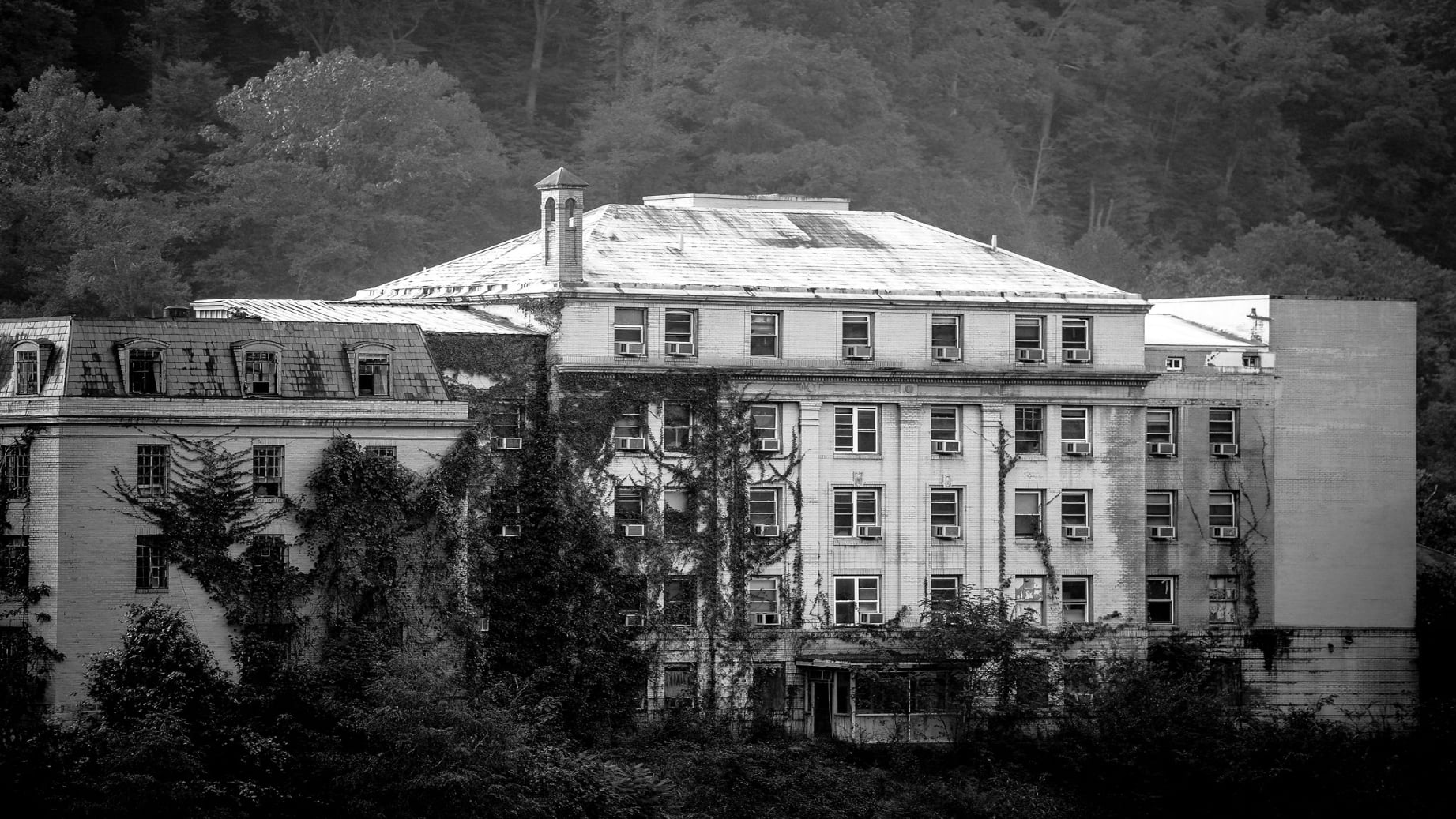
One of my favorite haunted locations here in West Virginia is Williamson Memorial Hospital, now known on the spooky circuit as the Old Hospital on College Hill, located in Mingo County. Spectral Research and Investigation (SRI) has already investigated this fascinating spot a handful of times, and plan on more visits in the future! And, similarly to the Trans-Allegheny Lunatic Asylum and the former WV State Penitentiary at Moundsville, the stories and history of the hospital are far too numerous to be limited to just a single blog post. Therefore, I'm slowly working on documenting as many stories from Williamson Memorial as I can---both the haunted history as well as the day to day stuff.  Today, I'll be showcasing two of the doctors that were integral to the hospital's inception, as well as it's continued reputation as a premier medical facility in southern West Virginia.

So, there's a GREAT story that is told to visitors of the hospital. It is said that one of the founders of Williamson Memorial, Dr. Salton, Sr., was an animal lover. When his horse needed surgery, instead of entrusting its care to a local veterinarian, Dr. Salton brought the animal to his own hospital and personally escorted the beast up the elevator to the fourth floor surgery suite. Patients and staff on the third floor kept hearing what sounded like hoof-steps above them, and were shocked to learn that indeed, there was a large, hoofed animal above them. To this day, there are those that strain to listen for the phantom 'clomp, clomp' coming from the fourth floor or a disembodied whinny echoing from the old elevator. (Source: Old Hospital on College Hill Website)

One might ask himself, 'who in their right mind would bring a HORSE into a people hospital?' Honestly, I cannot vouch for the authenticity of the tale, but let's take a look at the doctor behind it!

Dr. Russell Arthur Salton, son of Robert and Margaret Salton, was born in Hamden, New York on  August 12, 1887. In 1911, Dr. Salton graduated from Baltimore Medical College and shortly thereafter, married his wife, Ella Robertson. After completing an internship at a hospital in Welch, WV under Dr. Henry D. Hatfield, he opened up a practice in Big Sandy in McDowell County.

By 1914, Dr. Salton found himself in Williamson, WV where he opened up a joint practice with Dr. George Conley (watch for a future blog dedicated to Dr. Conley!), which would later become the basis for the first hospital in town the two would open together. When that hospital was destroyed by fire, Dr. Salton and Dr. Conley would embark on a journey to create a state of the art facility, well ahead of its time, known as Williamson Memorial Hospital, opening to the public in 1928.

From all the accounts I've read, Dr. Salton was an absolutely brilliant and progressive surgeon who was able to save countless lives over the years. One story that sticks out to me is documented in the Matewan Oral History Project interview with Charlotte Sanders from 1990. Mrs. Sanders shares that Dr. Salton was able to save her mother's life and her fertility from a tubal pregnancy when she was a young a girl. Unfortunately, nine years later, her mother became pregnant again with a tubal pregnancy, and while Dr. Salton again saved her life, at this point, both fallopian tubes had to be removed. 

Dr. Salton himself had three children with his wife, Ella. Their daughter, Virginia was born in 1913. A son, Robert, came in 1915, but unfortunately died in 1919. Finally, Russell Arthur, Jr. came along on March 7, 1921. Russell, Jr. would follow in his father's footsteps and also become a doctor.  In fact, it would be Dr. Salton, Jr. who would eventually take over Williamson Memorial. More on that in a few...

On January 20, 1941 Dr. Salton passed away from a pulmonary embolism at the age of 53. He passed away in the very hospital where he spent so much of his life. He was buried in Fairview Cemetery in Williamson. At the time, his son, Russell Jr. was in medical school, preparing to carrying on his father's legacy.


Dr. Russell Arthur Salton, Jr.
Source: Find-a-Grave user MLDS

As stated above, Dr. Russell Arthur Salton, Jr. was born on March 7, 1921 in Williamson, WV. He attended Williamson High School, where he played varsity football and later gave back by serving as the team physician. In 1942, he graduated from the University of Virginia. He met his wife, Cornelia Thomasson there; she was an RN in charge of the newborn nursery at University of Charlottesville Hospital.

Dr. Salton, Jr. also served three years in the US Air Corps and was Chief Surgeon at Suisun AFB in California. His love of aviation continued his entire life as he continued to pilot his private plane and serve as Chairman of the Mingo County Airport Authority. 

In 1949, Dr. Salton, Jr. assumed ownership of the Williamson Memorial Hospital along with Dr. Woodrow W. Scott. When Dr. Scott left, he was replaced with Dr. Robert J. Tchou, who was unfortunately killed in a plane crash in 1977. A year later, Salton was ready to retire from the medical field and sold the hospital in 1979 to Health Management Associates of West Virginia, who would later build a new hospital a short ways a way from what is now known as The Old Hospital on College Hill. 

Dr. Salton was a member of the local Presbyterian Church and served as the President and Medical Director of the R.A. Salton Clinic, named for his father. He passed away on December 20, 1992 and was buried in Mountain View Memorial Gardens. 

I think that its really interesting that the old Williamson Memorial Hospital 'stayed in the family' for pretty much it's entire existence as a hospital. Almost everyone in Mingo and the surrounding counties has had their lives touched by either one or both of the Drs. Salton in some way or another. These two men dedicated so much of their time and energy to their work, saving lives and unfortunately watching others slip away. Dr. Salton, Sr. himself passed away right there in the hospital that he helped bring to fruition. It makes me wonder...do either of them walk among the many spirits that still call the Old Hospital on College Hill home? The next time you're investigating this awesome location, maybe ask a few questions tailored to the Salton Family. You never know what responses you'll receive!  


Dr. Salton, Sr. Obit
21 January 1941
Bristol Herald Courier

Further Reading and Sources:

*Much of the info for this blog post came from bios submitted by 'Sabrina' to Find-a-Grave*

Find-a-Grave for Dr. Salton Sr.

Find-a-Grave for Dr. Salton Jr. 

The Old Hospital on College Hill Website

The Old Hospital on College Hill FaceBook

Theresa's Old Hospital on College Hill Collections

SRI Old Hospital Video #1

SRI Old Hospital Video #2

Dr. Salton, Sr.'s Death Certificate


Sunday, February 19, 2023

Elkins Inn and Suites

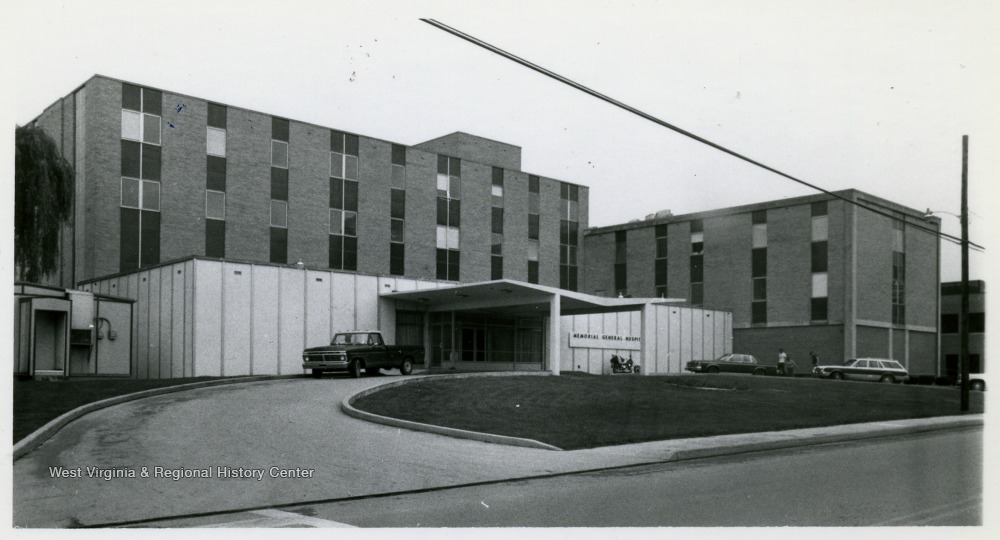
Memorial General Hospital in Elkins, WV
Source: WV History on View 

If you read yesterday's blog about my adventures in Sutton, WV, you may remember that I recently made a trip to Elkins with my husband. Being the spooky nerd that I am, any time I travel, I have to look up what haunted locations may be close to me, whether I have time to actually stop there or not. 

The whole area around Elkins is full of Civil War history, and there are a few really cool haunted places of note, such as Graceland and Halliehurst on the campus of Davis and Elkins College and Rich Mountain Battlefield, but I happened across a new-to-me location that we drove right past: The Elkins Inn and Suites.

Since it is a college town in close proximity to several big tourist destinations and state parks (as well as the state prison at Huttonsville), there are a LOT of hotels/motels around Elkins. There's one in particular, though that you pass right on the main drag through town that at first glance doesn't really look like a hotel. There's a reason for that---it used to be a hospital! 

I haven't been able to find out a whole lot about the history, but the earliest references I can find to the old Memorial General Hospital are from the 1950's, which looks about right from the photos of the building. As with any hospital, you're going to have a location with a lot of baggage, both good and bad. I'm sure the hospital saw happy times with babies being brought into the world, deathly ill people being brought back from the brink of death, and dedicated staff who gave their all to their work. But then you also have the negative events and emotions. Sick and injured people were brought here and many never made it home alive. Death, pain, and confusion were normal, everyday things. Loved ones left behind experienced anger, grief, despair, and sadness. All these factors are believed to be ideal for creating a haunting, and the old Memorial General Hospital is no exception.

I'm not sure when the hospital closed down, but it eventually did and was converted into use as a hotel. Originally branded under the Days Inn name, the earliest TripAdvisor reviews I could find date back to 2004. At some point, they dropped the Days Inn, and renamed the hotel as the Elkins Inn and Suites. According to their website information, the hotel boasts 46 pet-friendly guest rooms, free wifi, and an on-site restaurant (which early reviewers noted was downstairs in the basement morgue). There's also conference room space available, and apparently businesses can also rent out office space. Rooms come with TV, fridge, microwave...and maybe a ghost.

Today's Elkins Inn and Suites
Photo from FaceBook

Okay, so to start off, a LOT of the reviews I read for this location weren't favorable and a lot of that had to do directly or indirectly with the hotel's former life as a hospital. The guest room bathrooms were hospital room bathrooms, with very basic shower and toilet only. Thermostat controls weren't always available in rooms. The old elevator to the third floor where either all or the majority of guest rooms are located was out of order for awhile, and when it does work, seems to be rather noisy. Some reviewers also pointed out that there were windows in their rooms looking out into the hallway (like, in a hospital, lol). But, the biggest hospital-themed complaint seemed to be simply that it was pretty weird and creepy!

In July of 2014, that simple creepiness factor would evolve into claims of actual paranormal activity reported by one couple staying at the hotel. According to a review on TripAdvisor, user yakfit had this to say about their stay:

"We stayed one night last week. I did not read any reviews as we were last minute needing a room. I told my husband "this is a hospital!' As the elevator door was closing to go to floor 3, a man walked by and said "this is not a hospital!"I looked at my husband and just thought, that was strange that he would say that to me. After midnight, My husband woke me up as I was screaming because there was a woman in a hospital gown tying to push herself into bed with us.I went back to sleep and then he woke me up again as I was screaming because there was a babydoll head next to my husband's head n the bed!" I took a photo of the bathroom and the entrance door to our room and there are 2 orbs in the door photo.The lobby clerk told us that it was a former hospital. I think it is haunted."

Photo of 2 alleged orbs
Photo by TripAdvisor user yakfit


Although there was another review with the assertion that Ghost Hunters should come check this place out, it, nor any other reviews I could find mentioned any additional evidence or personal experiences with the alleged ghosts of the old hospital-turned-hotel. I'd love to know YOUR opinion; I think it definitely has the potential to be haunted, but I'd love for some more stories to come out. If you, or someone you know has stayed here and experienced something spooky, I'd love to hear your report. Feel free to comment down below, shoot me over an email, or find me over on Theresa's Haunted History FaceBook to share your story. 


Wednesday, June 8, 2022

The Murder of John Rose at the West Virginia Hospital for the Insane


West Virginia State Hospital 
for the Insane-Weston, WV
July 10, 1884
Source: WV History on View


On October 7, 1881, what started as a normal Friday night at the West Virginia Hospital for the Insane at Weston (now known as the Trans-Allegheny Lunatic Asylum) would turn deadly for one inmate. Blaine Starry, an inmate from Jefferson County, WV, was in his room for the night---Room No. 6, to be precise. He was alone, but his room was separated from another patient room by means of a mere flimsy partition that didn't even reach the ceiling. In the adjoining room were John Rose and an unnamed roommate. John Rose, described as an inoffensive elderly gentleman, was from Point Pleasant. 

For whatever reason, Starry, in possession of what one newspaper article called a 'club,' climbed over the low partition into Rose's room and beat the man to death. He severely wounded the roommate as well before guards could subdue him. Starry was said to be a powerful man, wielding his weapon with terrific force, so I can imagine how violent and brutal the death of Mr. Rose truly was. And, unfortunately, it would become just one in a string of brutal killings committed by asylum patients against their fellow inmates.  And, like, so many other deaths of this nature, may have been preventable---at least in the eyes of one citizen from Wheeling, WV.

Going by just the name 'W.,' a gentleman wrote several letters to the editor of the local Wheeling Daily Register newspaper about the incident. He states that although the murder was discussed freely around the town of Weston the next morning, the local papers didn't cover it. Even the Wheeling paper failed to mention the rumors of a coroner's jury. Would this tragic death simply be played off as just an unfortunate accident, or would someone be to blame for Rose's demise?

Obviously, if the events took place as described, then Starry would obviously be guilty of the crime, but could the administration and staff at the hospital helped prevent it? It seems likely, as W. goes on to mention the rooms the male patients were in were both too small AND the partitions, being designed for the female patients, were too low. Was there neglect on part of the current superintendent? Perhaps. 

Back in April of that same year, a board had voted to replace Dr. Camden, long time superintendent of the asylum with a new, inexperienced doctor named Dr. W.J. Bland. This decision was apparently upsetting to, well, just about everyone. It is said the patients, upon hearing the news, screamed and cried and carried on. The general public was outraged as well, and sent in letters of support, petitions, and prayers in order to keep Dr. Camden instated. But, on May 15th, 1881, Dr. Camden was out and Dr. Bland was in, without any reason ever being given as to why the switch was made. 

The mysterious W. of the editorial mentions that there's no way that the new superintendent could know what was going on with the patients. Unlike Dr. Camden who made it a point to walk the wards multiple times a day and speak with the patients, Dr. Bland maybe visited the wards once every 2 to 3 WEEKS. He also failed to keep up correspondence with friends and family of the patients, missing out on valuable insight into their behavior and state of mind. Also...just where were all the funds set aside for the improvement of the hospital going exactly?

These are all fair concerns and questions, and so many years later, we'll probably never know the full truth. Unfortunately, I could not find any death certificates or any additional information at all on John Rose.  I was able to finally track down Blaine Starry in the WV Vital Statistics Death Certificates database. It seems as if Mr. Starry passed away from unknown causes at the asylum on February 6, 1891. He was 44 years old, and had been diagnosed with 'insanity' since he was a teenager. He was buried in the hospital cemetery. 

Want MORE tales from the Trans-Allegheny Lunatic Asylum? Check out my page:

Sources:

The Weekly Register (:Point Pleasant, WV). 13 April 1881. Page 2

South Branch Intelligencer (Romney, WV). 21 October 1881. Page 4

The Daily Register (Wheeling, WV). 12 October 1881. Page 1

The Daily Register (Wheeling, WV). 19 October 1881. Page 1

The Wheeling Daily Intelligencer. 12 October 1881. Page 4


Thursday, October 14, 2021

The Nurse Who Never Clocked Out (Old Hospital on College Hill)


After a successful and exciting investigation of The Old Hospital on College Hill this past summer, the SRI team is ready to head back for a follow-up! On Thursday, October 14th, we'll once again be making the trip to Williamson, WV to explore and document the haunted history of the old Williamson Memorial Hospital. 

One of the most popular stories from the Old Hospital on College Hill is the tale of the nurse who never clocked out. As the story goes, sometime during the 1950's, or possibly into the 1960's, one of Williamson Memorial's very own nurses was involved in a car crash on her way to work.  She was taken to the hospital's Emergency Department, where she passed away from her injuries.  Ever since then, she has been seen in various parts of the hospital grounds by both staff and patients alike.

Back when the hospital was still in operation, a woman had come to Williamson Memorial at the start of her labor.  She was presumably admitted to the second floor obstetrics unit, where she patiently awaited the birth of her child.  She claims that a nurse came into her room and told her that her baby would not be born that day, and that she should head home to wait until labor progressed further. On her way out, she was stopped by a different nurse, who alarmed, asked her where she was going.  The woman stated that the other nurse had told her to go home.  Flabbergasted, the 'real' nurse told her that she was the only nurse on the floor that day, and not, she would NOT be going home until the after the baby was born!

During some renovations to the hospital, a construction worker reported seeing the apparition of a nurse on the fourth floor. He was so spooked by the image that he refused to return to work.

The phantom nurse has also been seen in the basement. Here, she is seen FLOATING, mainly back and forth in the area between the two X-Ray rooms. Interestingly to note, the basement was the original location of the emergency department. 

But, perhaps one of the most interesting pieces of evidence for the existence of a ghostly nurse is a set of two photos. The photos were taken on Halloween night of 2018 by a tour patron named Sheena Daniels.  After her tour had ended, she had taken the two back-to-back photos on the 'overlook' between the hospital and the nurse's college. One picture came out normal, but the other clearly shows what appears to be the image of a nurse in an older uniform.

The Old Nurse's College

I've searched diligently for any historical documentation of a nurse passing away in a car crash. I looked through tons of death certificates from the WV Vital Statistics website, and tried multiple search terms on Newspapers.com.  While an absence of evidence doesn't necessarily mean the story isn't true, as of yet I haven't been able to find any historical documentation to give us an idea of who this phantom nurse may be. I did find something close, however...

On November 12, 1957, Mrs. Anna Hensley had just dropped her daughter (Mrs. Alice Davis) off at work at the Miners' Memorial Center in South Williamson, KY, where Mrs. Davis worked as a nurse.  Mrs. Hensley was returning home to Chattaroy with her young grandson, Barry Neal Davis (Alice's son). As she was driving along Turkey Creek Road, her car skidded off the highway and plunged 200 feet end over end into the waters of the Tug River.  Both Mrs. Hensley and Barry were thrown from the car.  Barry had been thrown quite a distance into the river. Mrs. Hensley had been thrown from the car much closer to the bank.  Gravely injured and clinging to her overturned vehicle, she was desperately trying to get to young Barry. 

Luckily, a Good Samaritan had witnessed the accident.  Orange Adkins, described as a small man in his 60's, was driving his truck west on Turkey Creek Road when he saw the car skid off the road.  Adkins stopped his truck, ran down the embankment, and plunged into the cold river.  He got Barry ashore first, and then went back and pulled Mrs. Hensley to safety.

Mrs. Hensley was actually a nurse employed at Williamson Memorial at the time, and that is the hospital she and Barry were taken to for treatment.  Barry was treated for exposure and released.  Mrs. Hensley, however, had suffered a fractured pelvis and other major injuries.

Admittedly, I was super excited when I found the newspaper article outlining this accident.  I assumed that if Mrs. Hensley was so badly injured, there's a good chance that she had passed from those injuries. The timeline fit the ghost story as well. Fortunately for Mrs. Hensley, though, that wasn't the case. The 48 year old nurse recovered from her injuries and lived to the ripe ol' age of 96, passing away in 2005. 

The Courier-Journal, 13 November 1957

I'm interested in finding out where the story of the nurse who died in a car accident originated from, and if any other researchers have found documentation showing who this dedicated employee may be. Whether or not the back story of a nurse dying in a car crash is true doesn't necessarily matter, however.  Over the hospital's 60+ years of operation, I'm sure many nurses have been employed there and passed away from various causes, at various times, and in various places, including their own ER. Nursing is one of those professions that requires a great deal of dedication and it would be totally believable for someone who spent so much of their life helping others to want to continue doing so after death. I'll be continuing my search to give an identity to this oft-seen ghost of Williamson Memorial---The Old Hospital on College Hill. 

Want MORE ghost stories from The Old Hospital on College Hill? Check out my blog post about Mose Blackburn! Also, check out Brian's blog post about SRI's Old Hospital on College Hill investigation

The Old Hospital on College Hill Facebook

The Old Hospital on College Hill Website


Wednesday, September 8, 2021

The Haunting of Mose (Old Hospital on College Hill)

Photo from The Old Hospital on College Hill Facebook

Recently, Spectral Research and Investigation (SRI) traveled to Williamson, WV to investigate the haunted and historic Old Hospital on College Hill. Formerly known as Williamson Memorial, the hospital opened to patients on March 3, 1928 after a devastating fire destroyed the town's previous hospital. Built as a state of the art facility, Williamson Memorial served patients throughout southwestern West Virginia and eastern Kentucky for 60 years before being converted into doctors' offices, and then later used as storage. In 2020, the hospital was purchased by private investors, with the intent of saving the historic building and sharing that history with the public...as well as offering a really awesome spooky tourism opportunity. Public and private ghost hunts began earlier this year, and lemme tell you---if you get the chance to participate in an investigation or attend some other spooky event hosted by the Old Hospital on College Hill, DO IT! You won't be disappointed.

SRI had an extremely eventful evening, and I'll definitely be sharing all that in the upcoming weeks (also follow us on Facebook for updates!), but I wanted to start breaking down some of the most well-known ghost stories from the hospital. Let's get started with the haunting of Mose Blackburn. 

In the early hours of Saturday, July 21, 1962, a man named Mose Blackburn and his wife Ora had gotten into a pretty heated fight outside of the restaurant they owned on Pike Street. The police were called, and Lt. Garnet Richmond, accompanied by Patrolman Howard Hatfield arrived in their cruiser. When they arrived at the restaurant, they found Mose sitting in one car, and Ora in another. Hatfield got out of his vehicle and began to approach Mose’s car. At that time, Mose drew his .22 pistol. Richmond got out and circled Mose’s vehicle from the other side. Mose fired a shot through his windshield, and struck Lt. Richmond below the left eye. A gun battle ensued, and with 20 bullets fired, Mose ended up being struck in the right arm before being subdued when additional officers arrived.

 Both Richmond and Blackburn were taken to Williamson Memorial for the treatment of their injuries. Unfortunately, Lt. Richmond did not survive. According to his death certificate, he was shot around midnight, and was declared deceased 25 minutes later. In truth, he probably was dead long before he even made it to the hospital.

 Lt. Garnet Richmond was a 43 year old veteran of WWII. He left behind a wife, Ola Mae, a daughter Marcia, a step-daughter Janice, and…according to the Officer Down website, a daughter named Garnet Elaine who he never met. It seems as if Ola Mae had been pregnant at the time of the shooting. He was buried in Mt. View Memory Gardens in Huddy, Kentucky.

Hinton Daily News, 30 July 1962

Blackburn’s arm wound must have been fairly serious, because he was still in the hospital on Tuesday, July 24th. A newspaper article from that day states that his arraignment was to be held upon his release from the hospital and had been scheduled for Monday (presumably the following Monday-July 30th?). However, Mose would never make it to his arraignment.

While under the care of hospital staff, Mose was guarded by two sheriff’s deputies, who took turns watching him. These deputies were Enoch Fillinger and Morrie Blair. On Sunday night, July 29th, it is reported that Mose asked Fillinger to go to the nurse’s station and get him a drink of water. When Fillinger had stepped out of the room, Mose took off running out of his third floor room into the hallway, and leapt out a window. It is surmised that Mose had tried to commit suicide ahead of his Monday arraignment, but the fall left him in critical condition---for awhile at least.

 Mose survived and was being treated at Williamson Memorial up until his death at 2:15 am on Friday morning, August 24, 1962.  In a newspaper article from the next day, the Mingo County coroner, Tabor Ball, declared the cause of death to be an abscess on the lung. The death certificate backs this finding up, stating that the immediate cause of death was a condition called ‘empyema,’ which is when pus builds up in the area between the lungs and inner chest wall. This condition arose from having fractured his rib in his jump from the hospital window. In that leap, he also managed to suffer a broken femur, a fractured mandible, and multiple contusions, on top of the injuries sustained to his right arm in the gun battle. Mose was buried in Davis Memorial Gardens in Stone, Kentucky.  These are the facts as are backed up by newspaper articles and death certificates. What is left to speculation is whether or not Mose REALLY jumped out that 3rd story window or not, and if he did, why.

Mose's Death Certificate (Source)

Various sources have speculated that Mose did not jump on his own accord. Rather, he was thrown/pushed out the window by one of the police officers in retaliation for killing one of their own. This is plausible if the window Mose jumped from was the window in his own room. If he was thrown out the hallway window, surely a nurse or another patient would have seen what was going on.  Maybe they did, but chose not to say anything about it.  

This is the short-form county-issued death certificate for Mose Blackburn, which
can be found hanging beside the window Mose is said to have leapt from. 
Note that cause of death is listed as emphysema, NOT empyema. I
believe this is a transcription error and that the true cause of death
is actually empyema, not emphysema. 
Photo by Bree Fitzpatrick, SRI

Either way, let’s say that Mose DID jump out the window on his own. It makes perfectly good sense that a man in his mid-50’s would choose suicide over spending the rest of his life in the state penitentiary, or more likely, facing the electric chair (WV didn’t abolish the death penalty until 1965).  However, there might be a darker reason. There are stories that leading up to the suicide attempt, Mose was plagued with nightmares about someone coming to get him, and had commented that he feared for his life. Was he afraid of the living, breathing police officers that were constantly watching his every move, or were his fears a little more…supernatural?  Could the spirit of Lt. Garnet Richmond, who suffered a terrible death at the hands of Mose Blackburn, have been haunting him? Both men were taken to the same hospital and treated by the same doctors, yet one of them was dead within the hour, never again to see his expanding family. Did Lt. Richmond get his revenge by scaring Mose so badly that he tried to escape that hospital through any means necessary? Did Richmond’s spirit actually physically push him?  These are the questions that paranormal investigators are trying to answer, as it is believed that Mose is one of the ghosts that haunt the Old Hospital on College Hill.

When Paranormal Quest investigated the building in Spring of 2021, they actually gathered some data in that area. One member felt something breeze by him several times, taking the route that Mose would have taken when fleeing towards the window. Various sensors designed to pick up energy also were activated along the route that Mose would have taken, but could also be interpreted as being along the route that the officer or a nurse would have taken if they had rushed from the nurse's station to the window.  Other claims include sightings of a man standing in a third story window, seen from the outside by neighbors and visitors, which may or may not be the spirit of Mose Blackburn.

SRI spent a portion of our evening attempting contact with Mose and actually had some rather intriguing words pop up on the Ovilus, as well as being spoken through a 'ghost box' device. Obviously, the Ovilus isn't a super scientific, fool-proof tool of paranormal investigation, but I will say that we were almost able to have a conversation with whatever or whomever may have been present, with little to no outlier words popping up. Communication was brief, and abruptly stopped after only a short time, but not before we were able to establish that Mose seemed to feel at least some level of remorse for what he had done, but also felt that he was a victim too. Again, there is absolutely no scientific proof that we contacted anyone, let alone Mose, but it was intriguing. 

If you're interesting in booking a private investigation at the Old Hospital on College Hill, or wish to stay up to date on all the public hunts and other spooky events held throughout the year, be sure to check out the official Old Hospital on College Hill website, as well as their Facebook page. Stay spooky, ya'll! 


Information for this blog post came from the following newspaper articles:

"Cop Killer Critical." The Raleigh Register. 30 July 1962

"Police Lt. Killed in Gun Battle at Williamson." Beckley Post Herald. 22 July 1962

"Cop Killer to be Arraigned." The Weirton Daily Times. 24 July 1962

"Death Cause Fixed." Beckley Post Herald. 25 August 1962

"Williamson Man Jumps Hospital." Hinton Daily News. 30 July 1962

"Slayer of Williamson Cop Dies in Hospital." The Raleigh Register. 24 August 1962